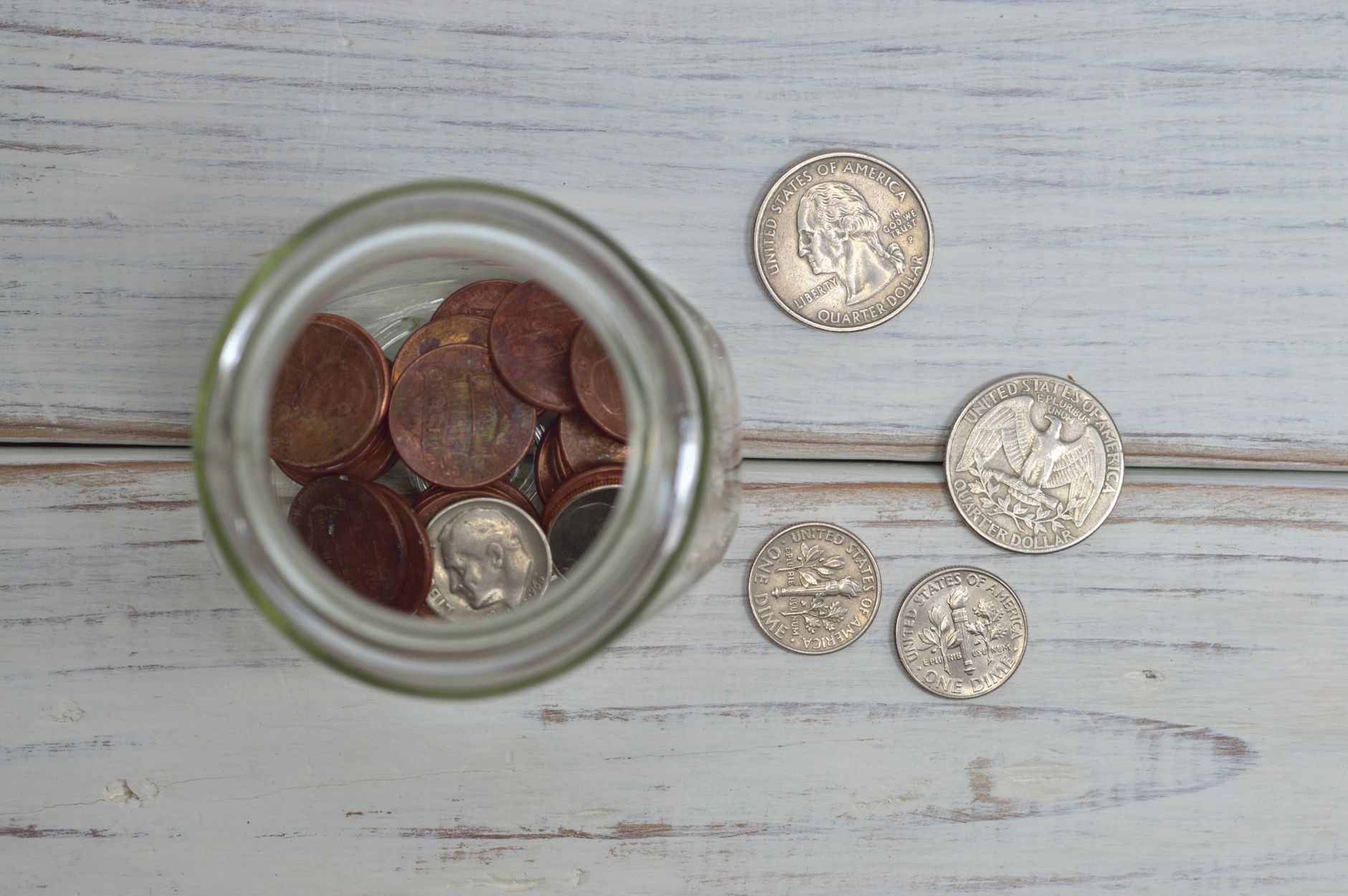
A sinking fund is money you set aside a little at a time for a big expense you know is coming. Instead of December’s gift list or August’s back-to-school haul landing on your credit card all at once, you save a small amount every month, so when the bill arrives, the money is already sitting there waiting for it.
The name comes from old business finance, but the idea is pure mom logic: you know Christmas is coming. You know the car will need tires eventually. Sinking funds just turn those “surprises” into a small, boring monthly transfer.
What is a sinking fund and how does it work?
A sinking fund works by breaking one big future expense into small monthly pieces. You pick the expense, figure out what it costs per year, divide by the number of months until you need it, and move that amount into savings each month. When the expense arrives, you pay it from the fund. No card balance, no scramble, no raiding the grocery money.
The magic is psychological as much as mathematical. A $900 December feels impossible. A $75 October transfer feels like a streaming bundle. Same money, completely different stress level.
How do you size a sinking fund?
The formula is simple: annual cost ÷ 12 = monthly contribution. If you’re starting mid-year, divide by the number of months you have left instead. Here’s the whole process:
- Pick one expense you know is coming (start with just one).
- Estimate its yearly cost, using last year’s spending as your best guide.
- Divide by 12 (or by the months remaining until you need the money).
- Set up an automatic monthly transfer for that amount into savings.
- When the expense arrives, pay it from the fund and start the cycle again.
Worked example: holiday spending. The National Retail Federation’s 2025 holiday survey found consumers planned to spend about $890 per person on gifts, food, and decorations. Round to $900. Starting in January, that’s $900 ÷ 12 = $75 a month. Starting now, in late July, you’d have 5 monthly transfers before December: $900 ÷ 5 = $180 a month. That’s steeper, which is exactly why the best month to start a Christmas fund is January, and the second-best month is today.
What are the most common sinking fund categories?
Start with one or two, the categories that blindside you most. Popular picks for families:
- Christmas and holidays: gifts, food, travel, teacher gifts, wrapping paper (it adds up)
- Car repairs and maintenance: tires, brakes, registration, the check-engine light
- Back-to-school: supplies, clothes, shoes, activity fees
- Birthdays: your kids’ parties plus every party they’re invited to
- Annual insurance premiums: paying yearly often costs less than monthly installments
- Summer camp and childcare gaps: June sneaks up fast
Here’s what a starter setup might look like for a family running three funds:
| Fund | Yearly cost | Monthly transfer |
|---|---|---|
| Christmas | $900 | $75 |
| Car repairs | $600 | $50 |
| Back-to-school | $360 | $30 |
| Total | $1,860 | $155 |
If $155 a month sounds out of reach right now, start with one fund at $20 and grow from there. Canceling a couple of forgotten subscriptions or trimming a bit off the food budget with our grocery-savings tips can free up the first fund’s worth of cash without touching anything you’ll miss.
Where should you keep sinking funds?
The best home for sinking funds is a high-yield savings account that lets you split your balance into named buckets or sub-accounts. Many online banks offer this feature for free, so you keep one account but see separate buckets labeled “Christmas,” “Car,” and “School,” each with its own balance and even its own goal.
Why high-yield? As of July 2026, top high-yield savings accounts pay roughly 3.5% to 4.15% APY, while the FDIC puts the average traditional savings rate at just 0.38%. On a $1,500 average balance, that’s the difference between earning around $55 a year and earning about $6. Not life-changing, but it’s free money for parking your funds in a smarter spot. Three quick rules:
- Keep sinking funds out of your everyday checking, so the money doesn’t get absorbed into daily spending.
- Name every bucket. “Christmas fund” is much harder to raid than “Savings.”
- Automate the transfer for payday, so saving happens before spending does.
What’s the difference between a sinking fund and an emergency fund?
A sinking fund is for expenses you can see coming; an emergency fund is for expenses you can’t. Christmas is not an emergency. It’s on the calendar. A job loss, an ER visit, or a furnace dying in January is what your emergency fund is for. Keeping them separate protects both: you’re not draining your safety net for gifts, and you’re not treating predictable bills like crises.
| Sinking fund | Emergency fund | |
|---|---|---|
| For | Known, planned expenses | True surprises |
| Examples | Christmas, car maintenance, insurance | Job loss, medical bills, urgent home repairs |
| Target amount | The expense’s actual cost | Often 3 to 6 months of essential expenses |
| Gets spent | On schedule, every year | Rarely, and ideally never |
| Refill plan | Restart monthly transfers after spending | Rebuild as soon as possible after any use |
If you can only do one right now, most experts suggest a small emergency cushion first, then your first sinking fund. Even $10 a week toward each builds real momentum, and a quick weekly transfer fits perfectly into step five of our 10-minute weekly money routine.
Key takeaways
- A sinking fund is money set aside a little at a time for a big expense you know is coming.
- Size it with one formula: annual cost ÷ 12. A $900 holiday season is $75 a month starting in January.
- Start with the one or two categories that blindside you most, and Christmas and car repairs top most lists.
- Keep funds in a high-yield savings account with named buckets; top accounts pay roughly 3.5% to 4.15% APY as of July 2026.
- Sinking funds cover expenses you can predict; emergency funds cover the ones you can’t. Keep them separate.
FAQ
How many sinking funds should I have?
Start with one or two and add more only when those feel automatic. Most families settle around three to six funds; more than that gets hard to track and spreads your money thin.
Is a sinking fund the same as a savings goal?
They’re close cousins. A savings goal is often open-ended, while a sinking fund targets a specific expense with a known cost and date, which is what makes the annual-cost-divided-by-12 math work.
What if I need the money before the fund is full?
Spend what’s there and cover the gap from your regular budget, since you’re still better off than starting from zero. Then adjust next year’s monthly amount so the fund fills up sooner.
Can I keep sinking funds in cash envelopes instead?
You can, and some people love the visual. Just know cash earns nothing and can be lost or spent too easily; a named savings bucket earns interest and keeps a clean record.
Ready to fund your first bucket? Our free Cashback Starter Kit is a straightforward way to seed it with money you’re already spending, and the Deal Diary email keeps the small wins coming.
Hannah’s take: The only version that ever worked for me was a separate account I couldn’t see in my main banking app. Out of sight is the whole trick.